


34% reduction with internet-based CBT*
Research referenced by SilentCloud found that internet-based CBT can help reduce the impact of tinnitus by around 34%.
Boots Hearingcare SilentCloud is an approved medical app that goes beyond simply masking tinnitus with sound. It brings together personalised education, Cognitive Behavioural Therapy (CBT), and sound therapies to help you understand your tinnitus and find ways to manage it.
Download the app to explore free tinnitus support and discover how SilentCloud could help you.
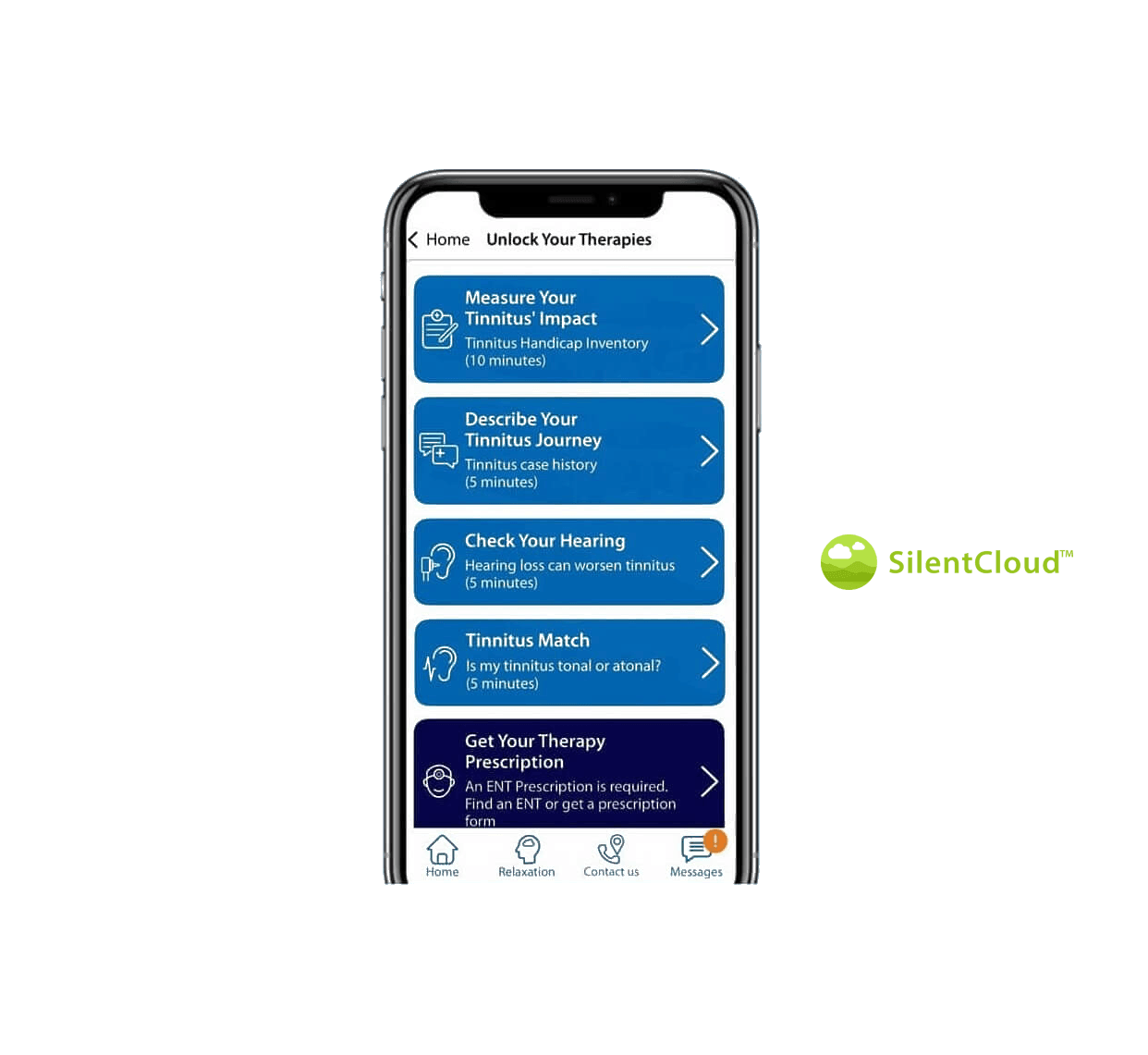
Tinnitus is when you hear sounds that are coming from inside your body rather than from an outside source. You might hear ringing, buzzing, humming, or other sounds, and what you hear can be different from person to person.
For some people, tinnitus comes and goes or is barely noticeable. For others, it can be more persistent and affect things like sleep, concentration, or enjoying everyday moments.
Everyone experiences tinnitus differently. Understanding how it affects you can be an important first step towards finding the right support.
Everyone experiences tinnitus differently, so there isn't one approach that works for everyone. With the right support, many people find ways to manage tinnitus so it becomes less noticeable and less intrusive over time.
More than masking the sound; White noise, music, or natural sounds can help make tinnitus less noticeable for some people. But tinnitus management isn't one-size-fits-all.
SilentCloud takes a more personalised approach, bringing together education, Cognitive Behavioural Therapy (CBT), and sound therapies to help you better understand your tinnitus and find ways to manage its impact on everyday life.
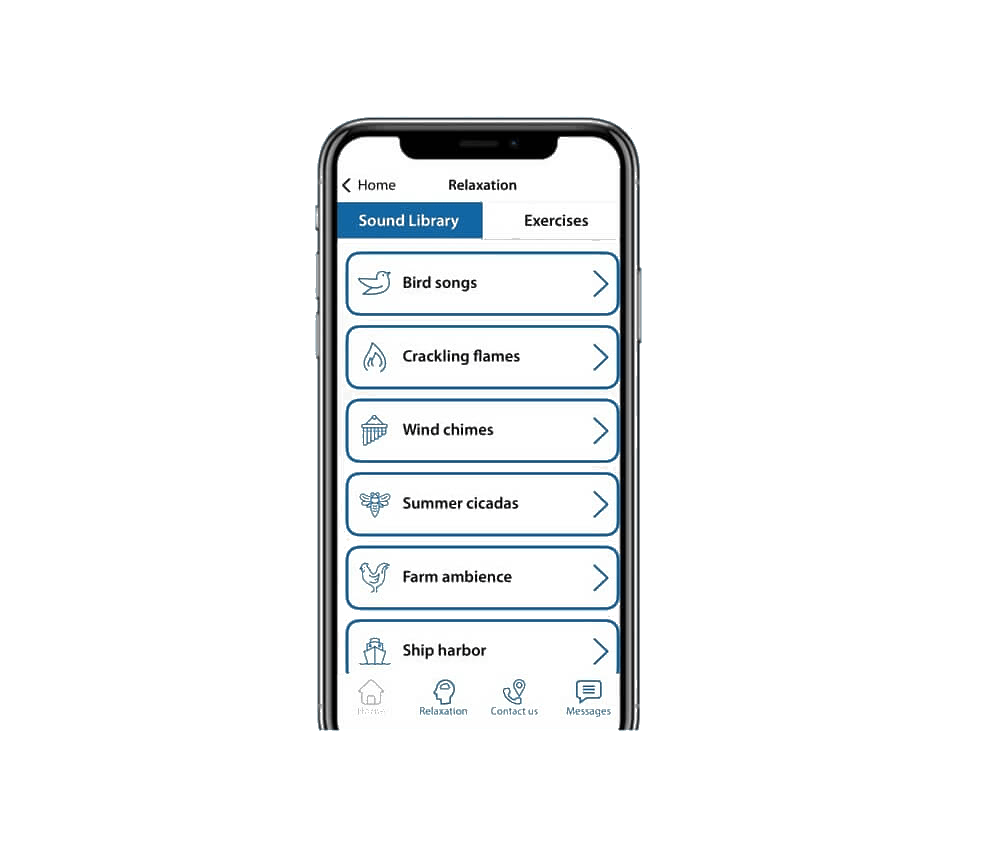
SilentCloud brings together established approaches to tinnitus management. Its evidence-based therapies are personalised to help you find ways to manage your tinnitus and reduce its impact on everyday life.
The approaches used in SilentCloud are backed by clinical studies involving more than 350 adults living with tinnitus.
You don't have to manage tinnitus on your own. Alongside the app, you can access support from SilentCloud specialists through Boots Hearingcare stores.
They'll help you understand the options available and, where appropriate, guide you towards additional therapies and support.

SilentCloud is an easy-to-use app that guides you through your tinnitus support step by step. Go at your own pace, with sessions taking just 15-20 minutes, so you can fit them around everyday life.
Start by exploring the free support available in the app. If you'd like more personalised help, additional therapies are available by subscription following an assessment and consultation with a Boots Hearingcare specialist.
Download SilentCloud to access free content that can help you understand tinnitus and explore ways to manage it. The app guides you through the support at your own pace, including relaxation techniques to help when tinnitus feels more noticeable.
If you’d like to explore additional therapies, you can take the next step with support from Boots Hearingcare.
1. Book an appointment
Book an assessment with one of our Boots Hearingcare tinnitus specialists.
2. Talk through your results
Your specialist will talk through your tinnitus, assessment results, and the support that may be right for you.
3. Access additional therapies
If additional therapies are suitable for you, your specialist can prescribe access to them through a subscription.
Expert support when you need it
Everyone's experience of tinnitus is different. Our Audiologists will review your hearing and talk to you about your tinnitus, medical history, and ear health.
We'll take the time to understand what you're experiencing and help you find the support that's right for you. Depending on your needs, that could include hearing technology, specialist tinnitus support, SilentCloud, or referral to another healthcare professional.

If you’d like to explore SilentCloud’s additional therapies, call 0345 675 3272 to book an assessment at one of our Boots Hearingcare stores. One of our SilentCloud specialist will take the time to understand how tinnitus is affecting you and talk you through the next steps.
They’ll review your results with you and, if SilentCloud’s additional therapies are suitable for you, provide a prescription so you can access them through a subscription.
Tinnitus and hearing loss are often connected. Around 90% of people living with tinnitus also have some degree of hearing loss***. For some people, hearing loss can make tinnitus more noticeable.
A free hearing test can help us understand your hearing and talk you through the support that may be right for you.

There are different ways to get support with tinnitus, depending on your hearing and how tinnitus affects you.
If SilentCloud isn't right for you, TinniSoothe offers another way to help manage tinnitus. This discreet, wearable sound therapy device plays gentle background sounds that can help make ringing, buzzing or hissing less noticeable.
It clips easily to your clothing or can be worn around your neck, with no earbuds or earphones needed. At just 59mm long and weighing 16g, it's small enough to use wherever you go.
We're here to support you with your hearing and help you find ways to manage tinnitus. You can also find free, impartial information and support from Tinnitus UK, the UK's tinnitus charity.
*Weise, C., Kleinstäuber, M., & Andersson, G. (2016). Internet-delivered cognitive-behavior therapy for tinnitus: a randomized controlled trial. Psychosomatic Medicine, 78(4), 501-510. https://doi.org/10.1097/PSY.0000000000000310, Jasper, K., Weise, C., Conrad, I., Andersson, G., Hiller, W., & Kleinstäuber, M. (2014). Internet-based guided self-help versus group cognitive behavioral therapy for chronic tinnitus: a randomized controlled trial. Psychotherapy and Psychosomatics, 83(4), 234-246. https://doi.org/10.1159/000360705, Hesser, H., Gustafsson, T., Lundén, C., Henrikson, O., Fattahi, K., Johnsson, E., … & Andersson, G. (2012). A randomized controlled trial of Internet-delivered cognitive behavior therapy and acceptance and commitment therapy in the treatment of tinnitus. Journal of Consulting and Clinical Psychology, 80(4), 649. https://doi.org/10.1037/a0027021
** Theodoroff, S. M., McMillan, G. P., Schmidt, C. J., Dann, S. M., Hauptmann, C., Goodworth, M. C., … & Henry, J. A. (2022). Randomised controlled trial of interventions for bothersome tinnitus: DesyncraTM versus cognitive behavioural therapy. International Journal of Audiology, 61(12), 1035-1044. https://doi.org/10.1080/14992027.2021.2004325, Tass, P. A., Adamchic, I., Freund, H. J., Von Stackelberg, T., & Hauptmann, C. (2012). Counteracting tinnitus by acoustic coordinated reset neuromodulation. Restorative Neurology and Neuroscience, 30(2), 137-159. https://doi.org/10.3233/RNN-2012-110218
*** Research consistently shows that approximately 90% of people with tinnitus have some degree of hearing loss, even when that hearing loss is not immediately apparent to the individual. Hearing loss is therefore considered the single most common factor associated with tinnitus. https://www.ukbiobank.ac.uk/projects/gwas-of-tinnitus-and-hearing-loss-in-the-general-population-with-emphasis-on-noise-exposure-and-aging/, https://hearinghealthfoundation.org/hearing-loss-tinnitus-statistics/, https://tinnitus.org.uk/understanding-tinnitus/living-with-tinnitus/tinnitus-and-hearing-loss/